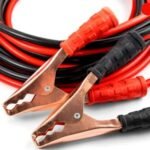
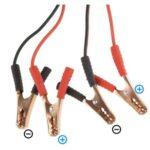
Nobody plans for a dead battery. It happens on a cold morning when you’re already running late, or in a half-empty parking lot at 9pm, and suddenly the only thing standing between you and getting home is whether you’ve got a decent set of jumper cables in the boot. We stock a proper range of them – light, everyday battery jumper cables for hatchbacks and sedans, right up through heavy-duty booster cables that can handle an SUV, a pickup, or a diesel engine that needs a lot more juice to turn over.
Call them jumper cables, jump leads, or booster cables – doesn’t matter, they all do the same basic job. They borrow current from a working battery (or a jump starter) and feed it into a dead one, just enough to get your engine cranking again. What actually matters is picking a set that suits your car and won’t let you down the one time you need it.
Here’s the thing about jumper cables: the cheap ones usually work fine right up until the moment you actually need them, and that’s a bad time to find out you bought the wrong thing. A cable that’s too thin for your engine heats up under load, fights the current instead of carrying it, and on a cold morning – when the battery’s already struggling – it might not deliver enough of a jump to start the car at all. A few things genuinely separate a good set from a bad one:
If you’re not sure what spec to look for, this table should sort it out. A good rule of thumb: if you live somewhere cold, or your vehicle’s on the bigger side, round up to the next size rather than the bare minimum.
Cable Gauge (AWG) | Amp Rating | Best Suited For | Recommended Length |
8 AWG | 200–300 A | Compact cars, hatchbacks, motorcycles | 8–10 ft |
6 AWG | 400–500 A | Sedans, small SUVs | 12–16 ft |
4 AWG | 600–800 A | Mid-size SUVs, crossovers | 16–20 ft |
2 AWG | 1000–1200 A | Full-size SUVs, pickup trucks | 20 ft |
1/0 AWG | 2000–3000 A | Diesel engines, commercial trucks, heavy equipment | 20–25 ft |
Quick note: amp rating is the peak the cable can handle, not the same thing as your battery’s cranking amps. You want the cable rated well above what the battery needs, so it’s never the weak link.
This part trips people up more than it should. Get the clamp order wrong, or ground the last one on the wrong spot, and you’re looking at sparks, a blown fuse, or worse – a fried alternator. It’s easy once you know the order, so stick to this every single time:
Step | Action | Connect To |
1 | Red clamp #1 | Positive (+) terminal of the dead battery |
2 | Red clamp #2 | Positive (+) terminal of the good battery |
3 | Black clamp #1 | Negative (–) terminal of the good battery |
4 | Black clamp #2 | An unpainted metal surface on the dead car’s engine block (not the dead battery’s negative terminal) |
5 | Start the working vehicle | Let it run for 1–2 minutes |
6 | Start the dead vehicle | If it doesn’t start, wait a few minutes and try again |
7 | Remove clamps | Reverse the exact order: black from engine block, black from good battery, red from good battery, red from dead battery |
That last clamp going on the engine block instead of the dead battery isn’t just a technicality – it keeps any spark well away from the battery itself, which is where hydrogen gas tends to collect. Small step, real reason for it.
Jumper cables have one obvious downside: you need a second car. Beyond that, they’re cheap, they never need charging, and a decent pair will outlast most other things in your boot. A portable jump starter solves the “need another car” problem since it’s basically a battery with cables built in, which is handy if you drive alone a lot or park somewhere isolated. Honestly, a lot of people end up with both – heavy-duty cables as the reliable fallback, and a jump starter for the times there’s simply no one around to help.